What was bought, and when
Oracle sold $10,000,000,000 of senior notes in a multi-part deal on 2 February 2026. The longest piece, and the one this page follows, is the 6.700% note due 4 February 2056, CUSIP 68389XEB7. It was priced at 99.820 to yield 6.714%.
So there is a natural starting line. On one side, $10,000 of that bond at its issue price. On the other, $10,000 of Oracle stock ($ORCL) at that same day's close of $160.06. Income is kept as cash on both sides, with no reinvestment on either, so the two legs are treated identically.
Both marked on one date, and that choice matters
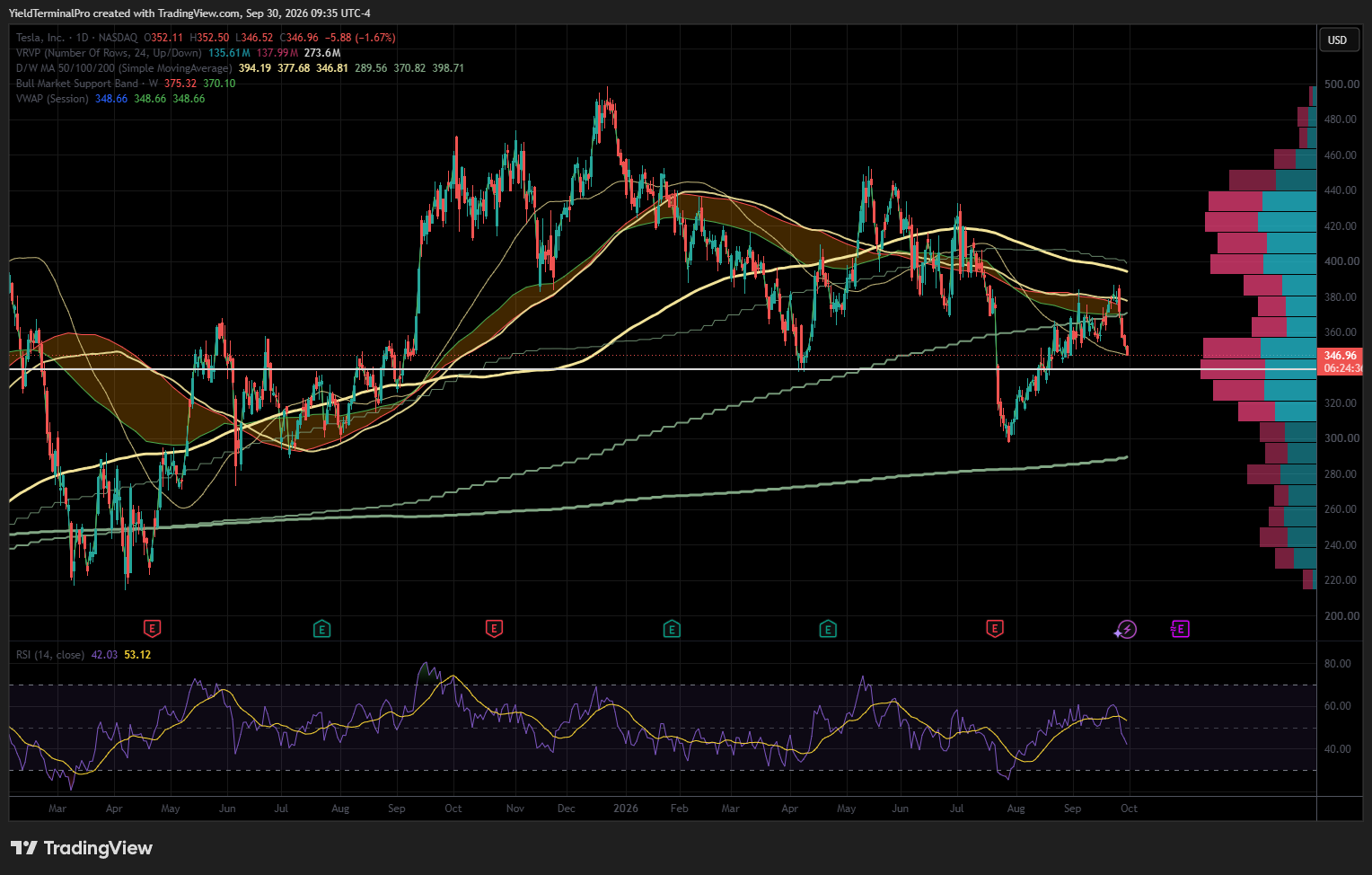
Both legs are marked on Monday 28 September 2026.
That is not housekeeping. The bond's most recent TRACE print is the 28th, and $ORCL then rose 3.91% on the 29th. Marking the stock a day later than the bond would have flattered the equity by nearly four points and produced a comparison that was false while every individual number in it stayed true. Same date, or the comparison does not get made.
The symmetry
| Bond | Stock | |
|---|---|---|
| Price on 2 Feb 2026 | 99.820 | $160.06 |
| Price on 28 Sep 2026 | 82.668 | $132.60 |
| Price change | -17.18% | -17.16% |
A thirty-year corporate bond and the common stock of the company that issued it, over the same eight months, fell by amounts that differ by three hundredths of a percentage point.
That is a coincidence. It is not evidence of anything about how bonds and stocks relate in general, and a different pair or a different window would not repeat it. But it does strip away the price variable completely, and leave only one thing standing.
The income is the entire story
| Bond | Stock | |
|---|---|---|
| Rate | 6.700% a year | 1.45% a year |
| Collected by 28 Sep | $436 | $62 |
| $10,000 is now worth | $8,718 | $8,347 |
| Total return | -12.82% | -16.53% |
The bond holder received one coupon on 4 August plus 54 days of accrued interest. The stock holder received two dividends of $0.500, with ex-dates on 9 April and 10 July. The 9 October dividend falls after the mark and is excluded.
Both legs lost money. The bond lost less, and the reason is not that it fell less, because it did not. The reason is that it paid more than four times as much along the way.
Why this matters for what is being said about Oracle right now
Oracle's long bonds are being quoted around 8%, and that number is real. Our own TRACE reading has the 2056 at 8.28% on 28 September.
The inference usually attached to it is wrong. A falling bond price does not raise what Oracle pays. Those coupons are fixed at 6.700% until 2056, about 95% of Oracle's debt is fixed rate, and only around 13% of it matures inside two fiscal years. An 8% quote is the market pricing Oracle's next borrowing, not repricing the money it already owes.
What the 8% does represent is a loss, and this page shows whose. It belongs to the investor who bought at issue in February. Oracle's interest bill is unchanged.
What this does not say
It does not say a bond is safer than a stock. It does not say anything about what either security does next. And it rests entirely on one entry date: a buyer from three months earlier or later gets a different answer.
That last caveat is not decorative. Elsewhere in this series the same bond, same entry, marked at a different date reversed the result outright and by a wider margin. Every comparison here is one date's answer, not the answer.